
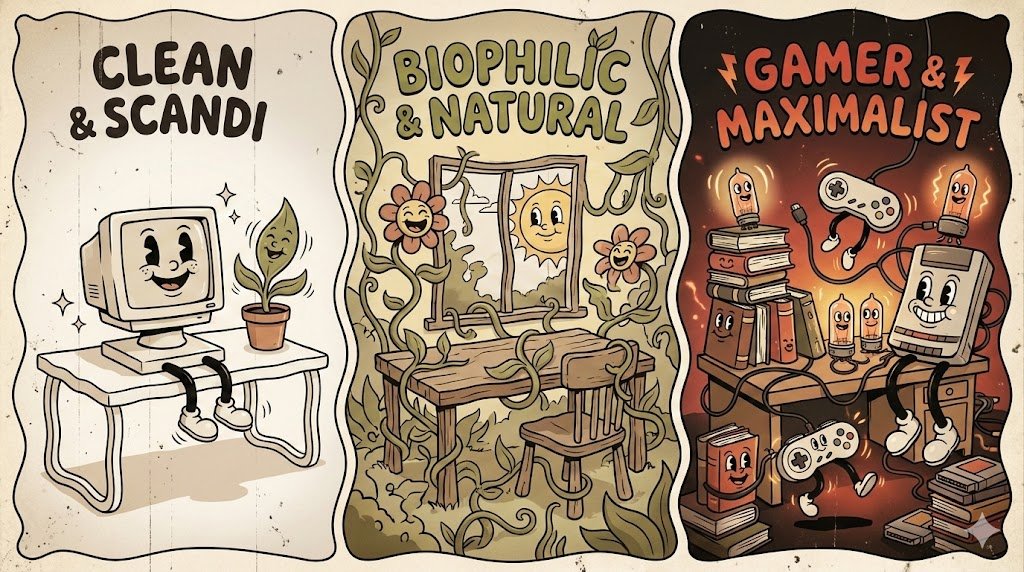

I bet you felt frustrated at your own desk in the past. Whether it was the short tabletop, the uncomfortable chair, or even the decor. I know there was (and still is) something that feels off.
And let’s face it, in today’s world, we practically live at our desks.
Whether you’re working, gaming, or browsing, that surface is your command center. And I know you’re not just looking for a functional setup. Naturally, you want your space to feel welcoming as well.
If you hang out on Pinterest, you’ll eventually find nice-looking setups that look impossible to replicate. They look cozy, expensive, and frustratingly perfect. It will leave you filled with jealousy and desire until it reaches your bones.
But fortunately, you can have them as well. Behind those glossy photos are specific, replicable design principles that anyone can use. You don’t need an interior design degree; you need a roadmap.
In this article, we’re cutting through the noise. I’m breaking down the 5 core aesthetics dominating the desk setup world right now. This way, you can stop wishing and start styling.
The Minimalist

Ah, minimalism. The style everyone thinks they understand, but few get right. To the uninitiated, minimalism looks like you sold all your possessions to join a cult. But the reality is that it is the ultimate exercise in intention.
Unlike popular opinion, minimalism isn’t about owning nothing. It’s about removing anything that doesn’t serve a purpose. It’s the visual equivalent of noise-canceling headphones. The goal is to reduce friction.
A cluttered desk is a cluttered mind. By introducing negative space (empty areas on the desk), you give your eyes—and your brain—a place to rest.
How to get the look:
- The Palette: Monochrome. Stick to matte black, stark white, or cool grays.
- The Gear: Wireless is king here. A visible cable feels like spinach in your teeth—small, but impossible to ignore.
- The Materials: Aluminum, glass, and matte composites.
- Key Item: A monitor arm to float your screen and reclaim the desk surface beneath it.
As a rule of thumb, if you haven’t used it in the last 48 hours, it belongs in a drawer, not on the desktop.
The Biophilic / Organic

If minimalism feels a little too clinical and lifeless, I get it. It’s not for everyone. If you want more, you might be craving the Biophilic aesthetic.
Biophilic design acknowledges a fundamental truth: humans don’t like to stare at drywall for 12 hours a day. We have an innate, genetic need to connect with nature. This aesthetic replaces the artificial with the organic, prioritizing texture over sheen.
Be mindful, this isn’t about tossing a cactus in the corner and calling it a day. It’s about “bringing the outside in.”
Studies have shown that incorporating natural elements into our living spaces reduces cortisol (stress) levels and boostscreativity. And it helps soften the harsh edges of modern technology.
How to get the look:
- The Palette: Earth tones. Sage greens, terracottas, warm beiges, and deep browns.
- The Materials: Real wood (walnut or oak), wool felt desk mats, cork, and stone. Avoid glossy plastics.
- The Flora: Plants are non-negotiable. If you have a “black thumb,” get a Snake Plant or a Pothos—they thrive on neglect.
- Key Item: A solid wood desktop, ideally with a “live edge” (where the natural bark shape is preserved).
Scandinavian Serenity
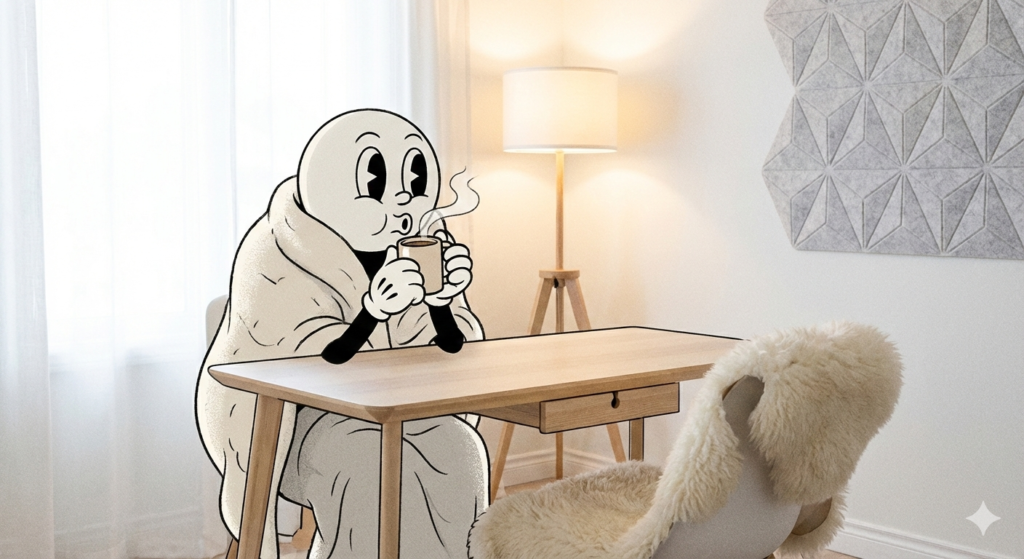
This aesthetic (often simply called “Scandi style”) is rooted in the Nordic concept of Hygge (pronounced “hoo-gah”).
Think of it like Minimalism and Bipohilic aesthetic got married and had a child.
At its core, it is an antidote to the chaotic and cluttered nature of modern life. It prioritizes functionality, simplicity (minimalist), and a deep connection to nature (biophilic). Allowing environments and mindsets that foster peace and well-being.
This aesthetic balances utility with warmth. It maximizes natural light, making small rooms feel massive, inviting, and effortlessly sophisticated.
How to get the look:
- The Palette: High-key neutrals. Whites, creams, pale grays, and light woods like birch, ash, or maple.
- The Lighting: Soft, diffused lighting is essential. No harsh overhead fluorescents. Prioritize warm lamps and maximize window proximity.
- The Textures: Soften the tech with textiles. A sheepskin throw on the chair or a felt acoustic panel on the wall.
- Key Item: A white or light-oak desk with slender legs to keep the visual weight low.
Warm Gamer Luxe
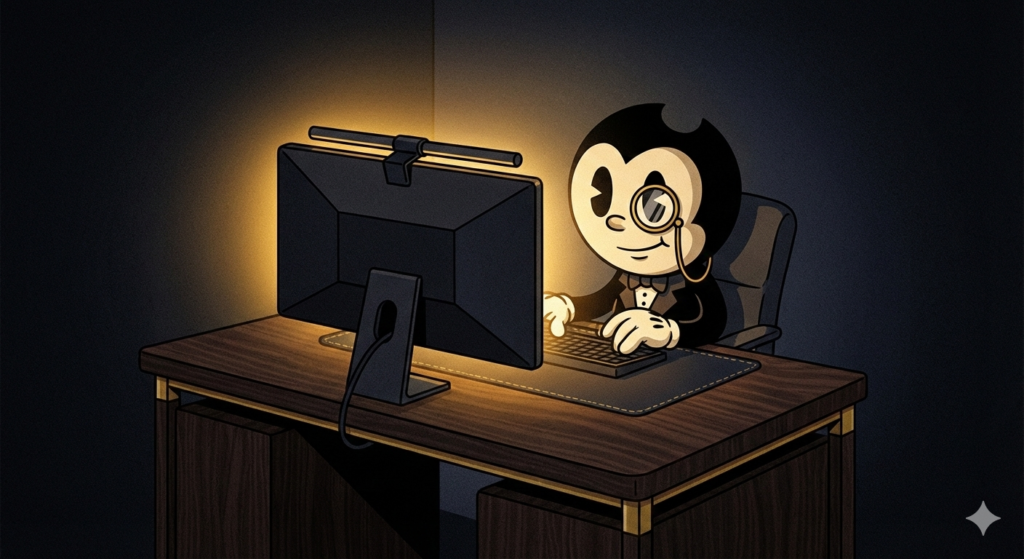
This aesthetic is a departure from the traditional “RGB carnival” that has dominated gaming setups for the last decade. Think of this as the graduation ceremony for your battle station—an upgrade to a more premium, adult experience.
Standard gaming setups often bathe the room in high-intensity blues and purples. This only keeps your brain in a hyperactive state and, in the long term, is actually quite damaging to your eyes. It’s hard to wind down when your room is shouting at you.
Warm Gamer Luxe swaps that frenetic energy for a calming, warm “vibe.” It’s about creating an environment where you can game for hours without visual fatigue, but that is also versatile enough for the real world.
By abandoning the “laser tag arena” look, you gain flexibility. This setup creates a cozy atmosphere that lets you relax and game longer, but instantly pivots to “professional” when duty calls. You can raid a dungeon at 2:00 AM and take a video conference call at 9:00 AM without looking like you live inside an arcade machine.
How to get the look:
- The Palette: Dark and moody. Charcoal, navy, black, and deep walnut.
- The Lighting: Abandon the rainbow cycle. Set your RGBs to a static warm amber, gold, or soft white. This is bias lighting, not a disco.
- The Materials: Dark wood, leather, brass, and dark metals.
- Key Item: A ScreenBar (monitor light bar) to illuminate your workspace without creating screen glare, paired with a high-quality leather desk pad.
Maximalism with Purpose (The “Minimax”)
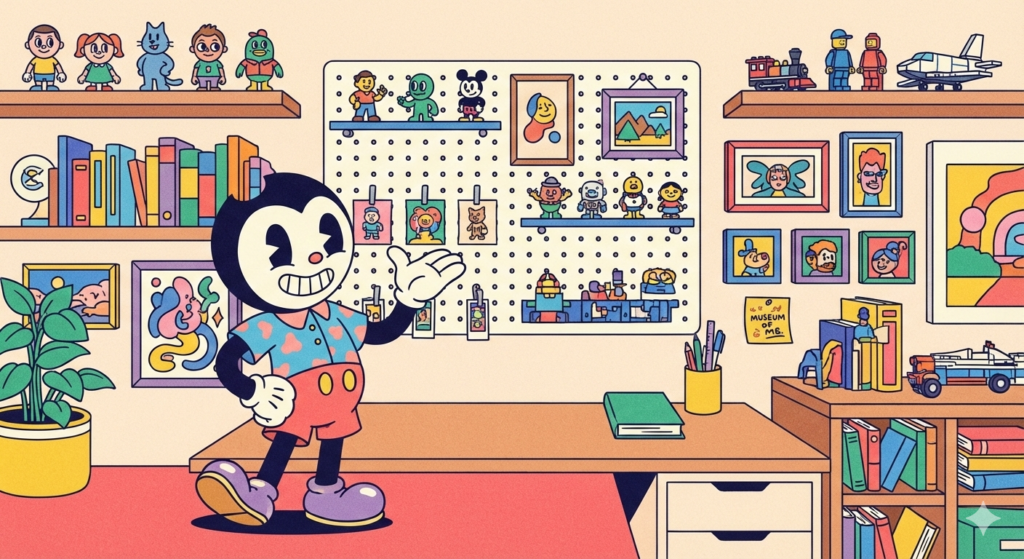
And what if you find an empty desk depressing? And want to be surrounded by the things you love. Things like figurines, bold colors, patterns, books, LEGO, etc.
If that’s you, welcome to “Minimax”—Maximalism with Intent. This is the hardest look to pull off because there is a very fine line between “curated collection” and “hoarding.”
This is about displaying your personality but keeping things zoned and organized. Allowing for a constant feeling of inspiration. Your desk becomes a museum of you. When you look up (or sideways), you see items that spark joy and creativity.
How to get the look:
- The Strategy: Verticality. Use shelves and pegboards to get items off the desk surface and onto the walls.
- The Zoning: Group similar items together. A cluster of Star Wars figures looks intentional; one figure next to a stapler looks messy.
- The Palette: Anything goes, but try to stick to a complementary color scheme so it doesn’t look chaotic.
- Key Item: A large pegboard (like the IKEA Skådis) or gallery shelving to act as a frame for your objects.
The Final Verdict

Here’s the secret that social media won’t tell you: These aesthetics are frameworks, not laws.
The best setups usually steal a little bit from each other. You might love the clean lines of Minimalism but want the warmth of Walnut wood (from Warm Gamer Luxe) and a plant or two (Biophilic). That’s not breaking the rules; that’syou.
Don’t let the trends paralyze you. The goal isn’t to replicate a Pinterest photo; the goal is to create a space that makes you want to sit down and create. Start by clearing your desk completely, and then only add back what is essential or beautiful.
Make it functional. Make it beautiful. But most importantly, make it yours.